4.Perform a patient interview and document a comprehensive chief complaint, history of present illness, and past medical history.
5.Accurately measure and record temperature, pulse, respiration, blood pressure, pulse oximetry, height, and weight using appropriate techniques.
6.Identify normal vital sign ranges for adults and pediatric patients and recognize common deviations.
7.Apply the HIPAA Privacy Rule and CDC Standard Precautions during all patient intake procedures.
8.Differentiate between triage urgency levels and prioritize patient flow in an ambulatory care setting.
9.Prepare the examination room and patient for the provider's encounter, including proper patient identification and consent processes.
1.1 The Patient Intake Process
Patient intake is the first clinical interaction in an ambulatory setting. It sets the tone for the visit and provides the foundational data for the provider's assessment. The CCMA must be efficient, accurate, and empathetic.
1.1.1 Patient Identification and Verification
Before any procedure, you must verify the patient's identity using two patient identifiers. Acceptable identifiers include the patient's full name and date of birth, or name and a unique medical record number. Never use the patient's room number or bed number as an identifier. This step is a core component of the National Patient Safety Goals (though the exam references general safety standards, the concept is critical). Always confirm the patient's identity before taking vitals, administering any questionnaire, or escorting them to the exam room.
1.1.2 The Patient Interview and Chief Complaint
The chief complaint (CC) is the reason for the visit in the patient's own words. Record it in quotation marks. For example, write "chest pain" not "patient reports angina." The history of present illness (HPI) expands on the CC using the OLDCARTS mnemonic:
Onset: When did it start? Sudden or gradual?
Location: Where exactly is it?
Duration: How long does it last? Constant or intermittent?
Character: What does it feel like (sharp, dull, burning)?
Aggravating factors: What makes it worse?
Relieving factors: What makes it better?
Treatments tried: What have you already done for it?
Severity: On a scale of 1–10, how bad is it?
You must also collect the past medical history (PMH), including chronic conditions (e.g., diabetes, hypertension), surgical history, allergies (specifically noting drug allergies and the reaction), current medications (including over-the-counter, herbal, and supplements), and social history (tobacco, alcohol, recreational drug use). Always ask about the date of last immunization if relevant to the visit.
1.1.3 Consent and Privacy
During intake, you must obtain informed consent for the procedure you are about to perform (e.g., taking blood pressure). This is not the same as the surgical consent the provider obtains. For the CCMA, consent is implied when the patient extends their arm for a blood pressure cuff. However, you must always explain the procedure briefly. All patient information discussed during intake is protected under the HIPAA Privacy Rule. Do not discuss a patient's condition in the waiting room, hallways, or with family members without the patient's explicit permission.
1.2 Vital Signs: Temperature
Temperature reflects the balance between heat production and heat loss. The normal oral range is 97.6°F to 99.6°F (36.4°C to 37.5°C). Rectal temperatures are typically 0.5°F to 1.0°F higher than oral; axillary temperatures are 0.5°F to 1.0°F lower.
1.2.1 Routes of Measurement
Oral: Place the probe under the tongue in the sublingual pocket. Contraindicated for patients who are unconscious, confused, have oral surgery, are coughing severely, or are on oxygen.
Rectal: The most accurate core temperature. Use a lubricated probe inserted 1–1.5 inches in adults. Contraindicated for patients with rectal surgery, diarrhea, or cardiac conditions (vagal stimulation).
Axillary: Safest but least accurate. Place the probe in the center of the armpit with the arm held tightly against the body.
Tympanic (Ear): Measures the tympanic membrane temperature. Pull the pinna up and back for adults; pull down and back for children under 3 years. Contraindicated with ear infections or drainage.
Temporal (Forehead): Uses infrared scanning across the forehead. Non-invasive and fast.
1.2.2 Documenting Temperature
Always document the route used (e.g., "98.9°F oral"). A temperature above 100.4°F (38°C) is considered a fever (pyrexia). Hypothermia is a temperature below 95°F (35°C).
1.3 Vital Signs: Pulse (Heart Rate)
The pulse is the palpable expansion of an artery from the wave of blood pumped by the heart. The normal adult resting pulse is 60–100 beats per minute (bpm). Well-conditioned athletes may be 40–60 bpm.
1.3.1 Sites and Technique
The most common site is the radial artery at the wrist. Use the pads of your index and middle fingers—never your thumb, as it has its own pulse. Count for 30 seconds and multiply by 2 for a regular rhythm. If the rhythm is irregular, count for a full 60 seconds. Other sites include the carotid (neck), brachial (antecubital), and popliteal (behind the knee).
Respiration is the exchange of oxygen and carbon dioxide. The normal adult respiratory rate is 12–20 breaths per minute. One respiration = one inspiration + one expiration.
1.4.1 Technique
Do not tell the patient you are counting respirations, as this will alter their breathing. Keep your fingers on the wrist as if still taking the pulse, and observe the rise and fall of the chest. Count for 30 seconds and multiply by 2, or count for a full 60 seconds if abnormal.
1.4.2 Abnormal Patterns
Tachypnea: Rate > 20/min (rapid, shallow).
Bradypnea: Rate < 12/min (slow).
Dyspnea: Difficulty breathing (subjective).
Orthopnea: Difficulty breathing when lying flat.
Cheyne-Stokes: Crescendo-decrescendo pattern with periods of apnea (often seen in end-of-life).
Kussmaul: Deep, rapid, gasping breaths (associated with diabetic ketoacidosis).
1.5 Vital Signs: Blood Pressure
Blood pressure (BP) is the force of blood against arterial walls. It is recorded as systolic (ventricular contraction) over diastolic (ventricular relaxation), e.g., 120/80 mmHg. The normal adult BP is < 120/80 mmHg per the American Heart Association (AHA) guidelines.
1.5.1 The AHA BP Categories (for adults)
Normal: Systolic < 120 AND Diastolic < 80
Elevated: Systolic 120–129 AND Diastolic < 80
Hypertension Stage 1: Systolic 130–139 OR Diastolic 80–89
Hypertension Stage 2: Systolic ≥ 140 OR Diastolic ≥ 90
71.Cuff size is critical. The bladder width should be 40% of the arm circumference, and the length should wrap 80% of the arm. A cuff that is too small will give a falsely high reading; a cuff that is too large gives a falsely low reading.
72.Position the patient seated with feet flat on the floor, back supported, and the arm supported at heart level.
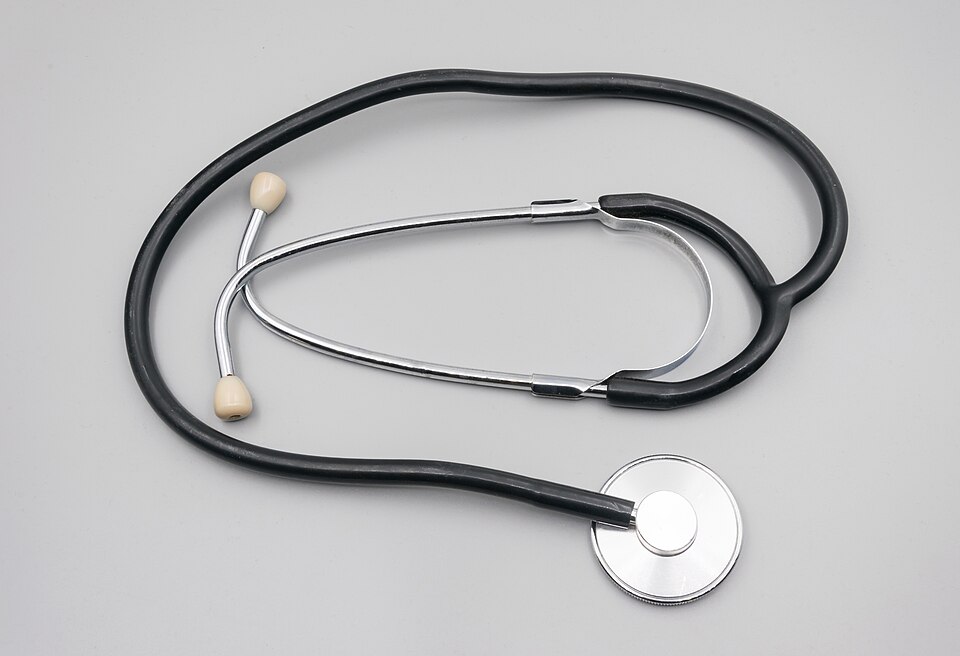
73.Palpate the brachial pulse. Place the stethoscope bell over the brachial artery.
74.Inflate the cuff to 30 mmHg above the point where the radial pulse disappears.
75.Deflate slowly (2–3 mmHg per second). The first Korotkoff sound (Phase I) is the systolic pressure. The point where the sound disappears (Phase V) is the diastolic pressure in adults.
1.5.3 Common Errors
Legs crossed: Raises BP.
Arm below heart level: Raises BP.
Talking during measurement: Raises BP.
Cuff too loose: Falsely high reading.
1.6 Vital Signs: Pulse Oximetry (SpO₂)
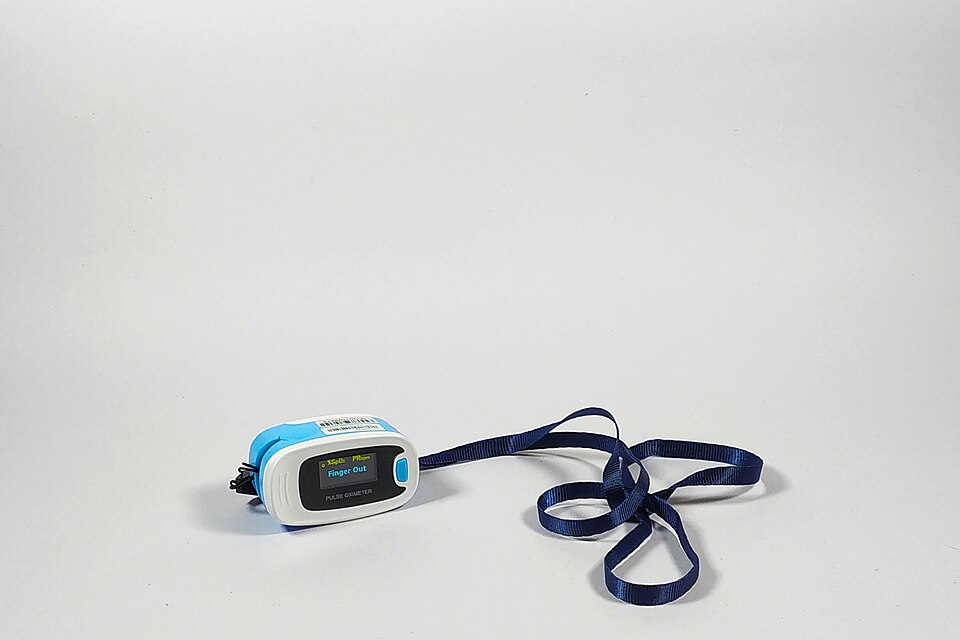
Pulse oximetry measures the peripheral capillary oxygen saturation. Normal SpO₂ is 95–100% at sea level. Values below 90% are considered hypoxemic and require immediate provider notification.
1.6.1 Technique
Place the sensor on a clean, warm digit (finger, toe, or earlobe). Remove nail polish or artificial nails, as they interfere with the infrared light. Ensure the patient is not shaking, and the site has adequate perfusion. Document the reading along with the oxygen flow rate (e.g., "SpO₂ 96% on 2 L nasal cannula").
1.7 Anthropometric Measurements
1.7.1 Height and Weight
Height: Use the stadiometer. The patient stands barefoot with heels together, back straight, and the head in the Frankfort horizontal plane (line from ear canal to eye socket is horizontal).
Weight: Calibrate the scale daily. The patient should remove heavy clothing and shoes. Record weight in pounds and kilograms (1 kg = 2.2 lbs).
BMI (Body Mass Index): Calculated as weight (kg) / height (m²). Normal BMI is 18.5–24.9. Overweight is 25–29.9. Obese is ≥ 30.
1.7.2 Pediatric Considerations
For infants, measure head circumference (occipital-frontal circumference) at every well-child visit until age 2. This tracks brain growth. Weight is measured on a pediatric scale with the infant naked (or in a dry diaper). Always document the percentile for age.
1.8 Triage and Patient Flow
Triage is the sorting of patients based on the severity of their condition. In an outpatient clinic, the CCMA often performs a telephone triage or walk-in triage to determine urgency.
Emergent (Life-threatening): Chest pain, severe respiratory distress, uncontrolled bleeding, altered mental status. These patients bypass the waiting room and go directly to an exam room or call 911.
Urgent: High fever, severe pain, suspected fracture. These patients should be seen within 1–2 hours.
Non-urgent: Minor cold, rash, routine follow-up. These patients can wait.
Important: The CCMA does not diagnose. You collect data and report findings to the provider. If a patient's condition worsens in the waiting room, re-triage immediately.
1.9 Infection Control and Safety During Intake
All patient contact requires adherence to CDC Standard Precautions. Treat all blood, body fluids, secretions, excretions, non-intact skin, and mucous membranes as potentially infectious.
Hand hygiene: Perform before and after every patient contact, after removing gloves, and after touching any contaminated surface. Use soap and water for visibly soiled hands; alcohol-based hand rub for routine decontamination.
Personal Protective Equipment (PPE): Wear gloves when there is potential contact with blood or body fluids. Wear a mask and eye protection if splashing is possible. Change gloves between patients.
Sharps safety: Never recap needles. Dispose of sharps immediately in a puncture-resistant, leak-proof container. This is mandated by the OSHA Bloodborne Pathogens Standard.
Equipment disinfection: Clean the exam table, blood pressure cuffs, and stethoscope between patients with an EPA-registered disinfectant.
1.10 Documentation and the Medical Record
All vital signs and intake data must be documented immediately in the patient's medical record—never on scrap paper to transcribe later. Use objective language (e.g., "patient appears pale and diaphoretic") rather than subjective language (e.g., "patient looks terrible").
Charting errors: Draw a single line through the error, write "error" above it, initial and date it. Never use correction fluid or erase.
Abbreviations: Use only approved abbreviations. "WNL" (within normal limits) is common, but be cautious—some facilities prohibit it.
Electronic Health Records (EHR): Log out of your workstation when leaving it. Never share your password. This protects patient privacy under the HIPAA Privacy Rule.
Blood pressure norms are based on age, sex, and height percentile. A pediatric BP cuff must cover two-thirds of the upper arm.
Use distraction techniques (toys, singing) to obtain accurate readings.
1.11.2 Geriatric Patients
Orthostatic hypotension is common: measure BP lying, sitting, and standing. A drop of > 20 mmHg systolic upon standing is abnormal.
Skin is fragile; use gentle handling with BP cuffs and pulse oximetry sensors.
Allow extra time for answering questions and processing instructions.
1.12 Common Exam Traps
Students frequently miss questions on this chapter due to the following misconceptions:
128.Using the thumb to take a pulse. The thumb has its own pulse, which will be counted as the patient's. Always use your index and middle fingers.
129.Counting respirations after telling the patient. If the patient knows you are watching their breathing, they will consciously alter it. You must count surreptitiously.
130.Confusing the BP cuff error. A cuff that is too small gives a falsely high reading. A cuff that is too large gives a falsely low reading. Students often reverse this.
131.Selecting the wrong Korotkoff sound. The first sound (Phase I) is systolic. The fifth sound (disappearance) is diastolic in adults. In children and pregnant women, the fourth sound (muffling) is sometimes used, but the exam expects Phase V for standard adults.
132.Mixing up HIPAA and consent. HIPAA protects privacy. Consent is permission for treatment. A patient can consent to a procedure but still have their privacy protected. They are not interchangeable.
133.Forgetting the "two identifiers." You cannot use the patient's room number. You must use name + DOB or name + MRN.
134.Documenting temperature without the route. "98.6°F" is meaningless without "oral" or "rectal." The route changes the interpretation.
135.Assuming a normal SpO₂ is 100%. 95–100% is normal. 100% is not required.
136.Placing the BP cuff over clothing. The cuff must be on bare skin. Clothing adds thickness and falsely elevates the reading.
137.Recapping needles. This is a direct violation of the OSHA Bloodborne Pathogens Standard. Never recap, bend, or break needles.
138.Confusing tachycardia with bradycardia. Tachy = fast (>100). Brady = slow (<60).
139.Forgetting to check for allergies before applying a latex cuff or adhesive. Always ask about latex allergies during intake.
Chapter Summary
The patient intake and vitals section is a high-yield area on the NHA CCMA exam. Master the normal ranges, the correct techniques, and the rationale behind each step. Remember that accuracy is paramount—a single vital sign error can change the provider's entire treatment plan. Always prioritize patient safety, privacy, and infection control. Practice the skills of palpation, auscultation, and measurement until they are second nature, and always document immediately and objectively.