4.Identify the legal and ethical principles governing patient consent, refusal of care, and advance directives.
5.Apply the core components of the CDC Standard Precautions and OSHA Bloodborne Pathogens Standard to daily clinical practice.
6.Perform and document accurate vital sign measurements, including temperature, pulse, respiration, and blood pressure, and interpret basic deviations from normal ranges.
7.Distinguish between the different types of patient positioning and explain the clinical rationale for each.
8.Execute proper techniques for patient transport, transfer, and ambulation while prioritizing fall prevention and body mechanics.
1.1 Legal and Ethical Foundations of Patient Care
1.1.1 Consent
Consent is the voluntary agreement by a patient to receive medical treatment. For the CCMA, the most relevant type is informed consent. This requires that the patient receives a clear explanation of the proposed procedure, its risks, benefits, and alternatives, in language they can understand. The provider (physician, NP, or PA) is legally responsible for obtaining informed consent. The medical assistant's role is to witness the signature, confirm the patient understood the information, and ensure the form is placed in the chart. You must never explain the risks or benefits yourself, as that falls outside your scope of practice.
Implied consent applies in emergency situations where the patient is unconscious or unable to respond, and treatment is necessary to prevent death or serious harm. It is assumed the patient would consent if they could.
1.1.2 Refusal of Treatment
A patient has the absolute right to refuse treatment, even if that refusal is against medical advice (AMA). When a patient refuses a procedure, you must:
16.Notify the provider immediately.
17.Document the refusal in the patient's chart, including the specific procedure refused, the time, the patient's stated reason, and the provider who was notified.
18.Have the patient sign an "Against Medical Advice" form if available. If they refuse to sign, document that as well.
A common error is assuming a patient who refuses one treatment refuses all care. Refusal is specific to the intervention offered.
1.1.3 Advance Directives
Advance directives are legal documents that communicate a patient's wishes regarding medical care if they become incapacitated. The two main types are:
Living Will: A written document stating which life-sustaining treatments the patient does or does not want (e.g., CPR, mechanical ventilation, feeding tubes).
Durable Power of Attorney for Healthcare (Healthcare Proxy): A document naming a specific person (the agent) to make healthcare decisions on the patient's behalf if they cannot.
The CCMA must respect these documents, place them prominently in the chart, and inform the provider of their existence. You cannot interpret or override them.
1.1.4 HIPAA Privacy Rule
The HIPAA Privacy Rule establishes national standards for the protection of protected health information (PHI). PHI includes any information that can identify a patient, including name, date of birth, medical record number, diagnosis, and treatment plans. Key rules for the CCMA:
Only access PHI necessary to perform your job duties.
Never discuss patient information in public areas (hallways, elevators, waiting rooms).
Use private, secure channels for communication (e.g., encrypted messaging, closed-door conversations).
When sharing information with family members, confirm the patient has authorized that disclosure.
Never leave patient charts or computer screens visible to others.
1.2 Infection Control and Safety
1.2.1 CDC Standard Precautions
The CDC Standard Precautions are the minimum infection prevention practices that apply to all patient care, regardless of suspected or confirmed infection status. They are based on the principle that all blood, body fluids, secretions, excretions (except sweat), non-intact skin, and mucous membranes may contain transmissible infectious agents. Core components include:
Hand Hygiene: The single most important measure. Perform hand hygiene before and after patient contact, after removing gloves, after touching blood/body fluids, and before touching your face or clean supplies. Use soap and water when hands are visibly soiled; use alcohol-based hand rub otherwise.
Personal Protective Equipment (PPE): Gloves, gowns, masks, and eye protection. Don PPE based on the anticipated exposure. Gloves are required for any contact with blood, body fluids, or non-intact skin. Change gloves between patients and between tasks on the same patient.
Respiratory Hygiene/Cough Etiquette: Instruct patients to cover their mouth/nose when coughing, offer masks to symptomatic patients, and maintain spatial separation.
Safe Injection Practices: Use a sterile, single-use needle and syringe for each injection. Never reuse a needle or medication vial for multiple patients.
Handling of Contaminated Equipment: Clean and reprocess reusable equipment properly. Dispose of single-use items in appropriate receptacles.
1.2.2 OSHA Bloodborne Pathogens Standard
The OSHA Bloodborne Pathogens Standard is a federal regulation designed to protect healthcare workers from occupational exposure to bloodborne pathogens (HBV, HCV, HIV). Key elements:
Exposure Control Plan: A written document outlining the employer's procedures for reducing exposure.
Engineering Controls: Devices that isolate or remove the hazard (e.g., sharps containers, safety needles).
Work Practice Controls: Procedures that reduce exposure (e.g., no recapping needles, washing hands after glove removal).
PPE: Must be provided by the employer at no cost.
Hepatitis B Vaccination: Must be offered free of charge to all employees with potential exposure.
Post-Exposure Evaluation: After a needlestick or splash, immediately wash the area with soap and water (or flush mucous membranes with water), report the incident to your supervisor, and seek medical evaluation per the facility's protocol.
1.2.3 Transmission-Based Precautions
In addition to Standard Precautions, some patients require Transmission-Based Precautions based on how their infection spreads:
Contact Precautions: For infections spread by direct or indirect contact (e.g., MRSA, C. diff). Use gown and gloves; dedicate equipment to the patient.
Droplet Precautions: For infections spread by large respiratory droplets (e.g., influenza, pertussis). Use a surgical mask within 3 feet of the patient.
Airborne Precautions: For infections spread by tiny airborne particles (e.g., tuberculosis, measles, chickenpox). Use an N95 respirator (or higher), place the patient in a negative-pressure airborne infection isolation room, and limit transport.
1.3 Vital Signs: Measurement and Interpretation
Vital signs are objective measurements of basic body functions. They are a critical screening tool and must be measured accurately and documented immediately.
1.3.1 Temperature
Normal oral temperature is approximately 98.6°F (37.0°C), with a normal range of 97.0°F to 99.5°F (36.1°C to 37.5°C). Routes include:
Oral: Most common. Contraindicated in patients who are confused, unconscious, have had oral surgery, or are on oxygen.
Rectal: Most accurate core temperature. Used in infants and when oral is contraindicated. Insert lubricated probe 1–1.5 inches (2.5–4 cm) in adults.
Axillary: Least accurate. Place probe in the center of the armpit.
Tympanic (Ear): Measures the tympanic membrane temperature. Requires correct ear canal placement. Contraindicated in ear infections or after ear surgery.
Fever is generally defined as a temperature > 100.4°F (38.0°C). Hypothermia is < 95.0°F (35.0°C).
1.3.2 Pulse (Heart Rate)
Normal adult resting pulse is 60–100 beats per minute (bpm). Common sites include the radial (wrist) and carotid (neck). For an apical pulse (stethoscope over the heart), count for a full 60 seconds. When assessing, note the rate, rhythm (regular vs. irregular), and strength (bounding, normal, weak/thready). Bradycardia is < 60 bpm; tachycardia is > 100 bpm. In children, normal rates are higher (e.g., 80–120 bpm for toddlers).
1.3.3 Respiration
Normal adult respiratory rate is 12–20 breaths per minute. Count breaths for 30 seconds and multiply by 2; count for a full minute if irregular. Observe the depth (shallow, normal, deep) and rhythm. Bradypnea is < 12 breaths/min; tachypnea is > 20 breaths/min. Dyspnea is difficult or labored breathing. Apnea is the absence of breathing.
1.3.4 Blood Pressure (BP)
Blood pressure is measured in millimeters of mercury (mmHg) and recorded as systolic (pressure during heart contraction) over diastolic (pressure during heart relaxation). Normal adult BP is < 120/80 mmHg. Categories per the AHA:
Elevated: Systolic 120–129 and diastolic < 80.
Hypertension Stage 1: Systolic 130–139 or diastolic 80–89.
Hypertension Stage 2: Systolic ≥ 140 or diastolic ≥ 90.
Hypotension: Systolic < 90 or diastolic < 60.
Measurement technique:
76.Patient should be seated with feet flat, back supported, and arm supported at heart level.
77.Use the correct cuff size (bladder width ~40% of arm circumference, length ~80%).
78.Palpate the brachial pulse, place the stethoscope over it, and inflate the cuff 20–30 mmHg above the point where the pulse disappears.
79.Deflate slowly (2–3 mmHg/sec). The first Korotkoff sound (Phase I) is the systolic pressure. The point where sounds disappear (Phase V) is the diastolic pressure.
Common errors: Using a cuff that is too small falsely elevates the reading; a cuff that is too large falsely lowers it. The arm must be at heart level; a lower arm falsely elevates the reading.
1.4 Patient Positioning
Positioning is used for patient comfort, examination, and procedures. The CCMA must know the standard positions and their indications.
Supine (Dorsal Recumbent): Lying flat on the back. Used for general exams, abdominal assessments, and vital signs. In the dorsal recumbent variation, the knees are bent.
Prone: Lying flat on the stomach. Used for back exams and certain procedures.
Lateral (Side-lying): Lying on the side. Used for rectal exams and to relieve pressure on the sacrum. The Sims position is a left lateral position with the right knee drawn up, commonly used for enemas and rectal exams.
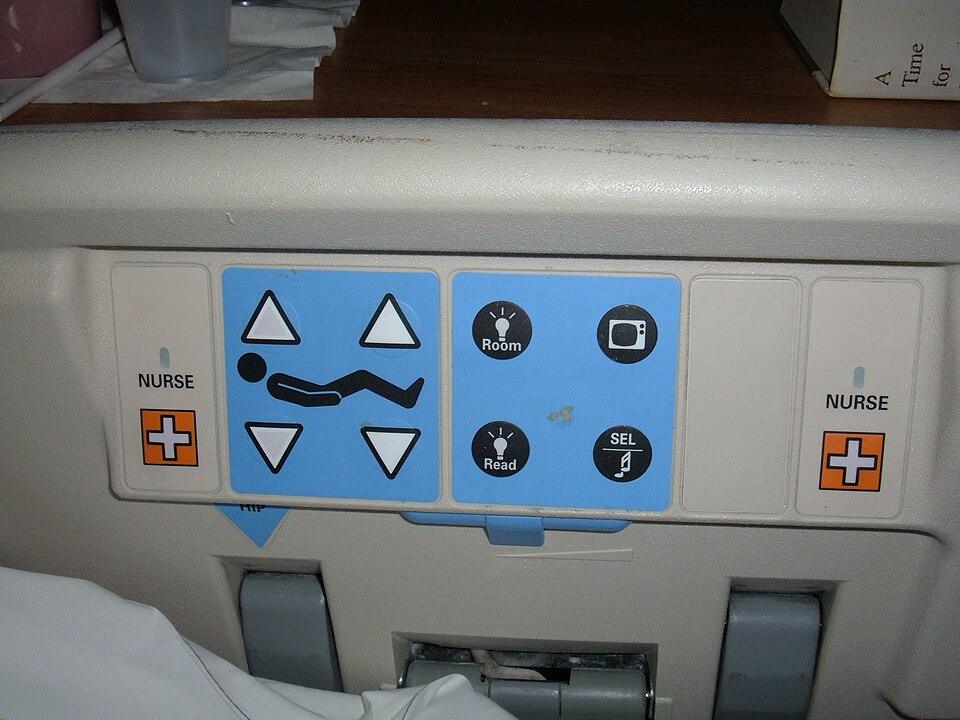
Fowler's Position: Head of bed elevated 45–90 degrees. Used for patients with respiratory distress, dyspnea, and for feeding. Semi-Fowler's is 30–45 degrees, used for post-operative care and tube feeding.
Trendelenburg Position: Head lowered, feet elevated (head down). Historically used for shock, but current evidence is limited. It is used for certain surgical procedures and to improve venous return in specific cases.
Reverse Trendelenburg: Head elevated, feet lowered. Used for hiatal hernia and certain head/neck surgeries.
Lithotomy Position: Supine with legs in stirrups. Used for pelvic exams and gynecological procedures. Requires careful draping for patient dignity.
Knee-Chest Position: Patient on knees with chest on the table. Used for proctologic exams and to reposition a retroverted uterus.
1.5 Patient Transport and Transfer
1.5.1 Body Mechanics
Proper body mechanics prevent injury to both the patient and the healthcare worker. Key principles:
Maintain a wide base of support (feet shoulder-width apart).
Bend at the hips and knees, not the waist.
Keep the patient's weight close to your body.
Use your leg muscles to lift, not your back.
Avoid twisting; pivot with your feet instead.
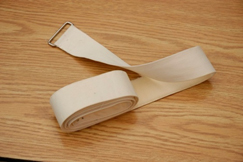
Use assistive devices (gait belts, transfer boards) whenever possible.
1.5.2 Transport Methods
Ambulatory (Walking): For patients who can bear weight. Use a gait belt for support if needed. Walk slightly behind and to the side of the patient.
Wheelchair: Lock the brakes before transferring the patient in or out. When moving a patient in a wheelchair, push from behind (unless the patient requires a different method). Back the wheelchair into the elevator so the patient faces the door.
Stretcher (Gurney): For patients who are unable to sit up or require a flat surface. Always lock the stretcher wheels before transferring. Raise the side rails and secure the patient with straps.
1.5.3 Transfer Techniques
Bed to Wheelchair: Position the wheelchair at a 45-degree angle to the bed, lock the brakes. Assist the patient to sit on the edge of the bed, then pivot them into the chair.
Bed to Stretcher: Use a transfer board or a draw sheet with two or more staff members. Log-roll the patient onto the board, then slide them across.
1.5.4 Fall Prevention
Falls are a major patient safety issue. The CCMA must:
Identify patients at risk (elderly, confused, post-op, on sedatives).
Keep the bed in the lowest position with side rails up when the patient is unattended.
Ensure the call light is within reach.
Keep the floor clear of clutter and spills.
Never leave a patient unattended on a stretcher or in a wheelchair without locking the brakes.
1.6 Common Exam Traps
Students frequently miss questions on this material due to subtle but critical distinctions. Watch for these traps:
119.Consent vs. Witnessing: The provider obtains informed consent; the MA only witnesses the signature. A trap question will describe the MA explaining the risks of a procedure to the patient. This is outside the MA scope and incorrect.
120.Implied Consent: Implied consent is for emergencies when the patient is unconscious. It does not apply to a conscious patient who is simply refusing to answer questions.
121.HIPAA and Family Members: A spouse or adult child is not automatically allowed to access PHI without patient authorization. The trap is assuming family has a right to information.
122.Standard vs. Transmission-Based Precautions: Standard Precautions apply to all patients. Transmission-Based Precautions (Contact, Droplet, Airborne) are in addition to Standard Precautions for specific infections. A trap will ask what precautions are needed for a patient with MRSA — the answer is Contact + Standard, not just Contact.
123.Airborne vs. Droplet: Airborne (TB, measles) requires an N95 respirator and negative-pressure room. Droplet (flu) requires a surgical mask. Students often mix up the mask type.
124.Blood Pressure Cuff Size: A cuff that is too small gives a falsely high reading. A cuff that is too large gives a falsely low reading. Remember: "Small = Sky-high."
125.Vital Sign Ranges: Normal adult pulse is 60–100, respirations 12–20, BP < 120/80. A trap will list a pediatric range as the adult normal, or vice versa. Always read the age in the question.
126.Counting Respiration: You must count respirations without telling the patient you are doing so, because they will alter their breathing. The trap is counting while the patient is aware.
127.Fowler's vs. Semi-Fowler's: Fowler's is 45–90 degrees; Semi-Fowler's is 30–45 degrees. A trap will swap the degree ranges.
128.Sharps Disposal: Never recap a needle. The OSHA standard requires immediate disposal in a puncture-resistant sharps container. The trap is "recap using the one-handed scoop technique" — while this is a work practice control in some contexts, the safest and standard answer for the exam is do not recap at all unless a specific safety device is used.
Chapter Summary
This chapter covers the foundational skills of general patient care. You must be able to apply legal principles (consent, HIPAA), infection control standards (CDC, OSHA), vital sign measurement, positioning, and safe patient handling. Mastery of these topics is essential not only for the exam but for safe clinical practice. Remember that accuracy in vital signs, strict adherence to infection control, and respect for patient rights are non-negotiable standards of care. Review the normal ranges and the specific "traps" above to avoid common pitfalls on exam day.