
Foundational Knowledge and Basic Science
ccmapractice study guide with diagrams.
Foundational Knowledge and Basic Science
Learning Objectives
By the end of this chapter, you will be able to:
1.1 Professional Roles and Scope of Practice
The Certified Clinical Medical Assistant is a multi-skilled allied health professional who works primarily in ambulatory settings such as physician offices, clinics, and urgent care centers. The CCMA functions under the direct or indirect supervision of a licensed physician, podiatrist, or other licensed healthcare provider. The scope of practice is defined by state law, institutional policy, and the supervising provider's delegation.
Clinical duties include: taking vital signs, preparing patients for examinations, assisting with minor surgical procedures, administering medications (where state law permits), performing CLIA-waived tests, collecting and processing specimens, and performing electrocardiograms (ECGs). Administrative duties include: scheduling appointments, managing patient records, handling insurance billing, and maintaining the front office.
Critical boundary: The medical assistant does not diagnose, prescribe, interpret results independently, or perform invasive procedures beyond the scope of training. Triage decisions and medication adjustments are the provider's responsibility. When in doubt, the MA must defer to the provider.
1.2 Medical Terminology and Body Structure
Medical terminology is built from roots, prefixes, and suffixes. Most terms derive from Greek or Latin. For example: cardio (heart), hepat (liver), nephr (kidney), derm (skin), gastr (stomach). Prefixes modify meaning (e.g., tachy- = fast, brady- = slow, hyper- = above, hypo- = below). Suffixes indicate procedure or condition (e.g., -ectomy = surgical removal, -itis = inflammation, -algia = pain).
Directional terms are essential for accurate documentation:
Body cavities: The dorsal cavity (cranial and spinal) and the ventral cavity (thoracic, abdominal, and pelvic). The thoracic cavity contains the heart and lungs; the abdominal cavity contains the digestive organs; the pelvic cavity contains the reproductive and urinary organs.
Planes of the body: Sagittal (divides left/right), frontal or coronal (divides front/back), and transverse (divides top/bottom).
1.3 Major Body Systems: Structure and Function
1.3.1 Cardiovascular System
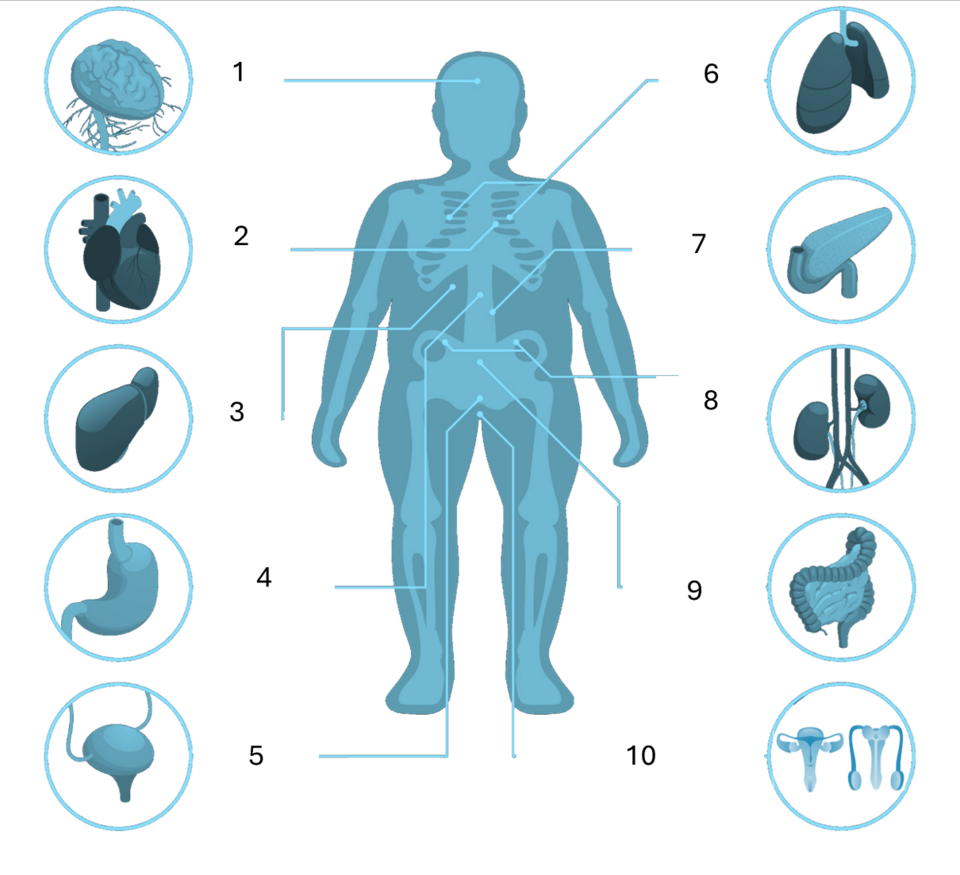
The heart is a four-chambered muscular pump. The right atrium receives deoxygenated blood from the body via the vena cavae; the right ventricle pumps it to the lungs. The left atrium receives oxygenated blood from the lungs; the left ventricle pumps it to the systemic circulation. The cardiac cycle includes systole (contraction) and diastole (relaxation). The conduction pathway is: SA node → AV node → Bundle of His → Purkinje fibers. The MA must recognize normal heart rate (60–100 bpm) and blood pressure (120/80 mmHg) for adults.
1.3.2 Respiratory System
The upper airway includes the nose, pharynx, and larynx. The lower airway includes the trachea, bronchi, bronchioles, and alveoli. Gas exchange occurs at the alveolar-capillary membrane. Normal respiratory rate is 12–20 breaths per minute. The MA measures oxygen saturation via pulse oximetry; normal SpO₂ is 95–100%.
1.3.3 Musculoskeletal System
Bones provide structure and protection; muscles enable movement. The axial skeleton (skull, spine, ribs) and appendicular skeleton (limbs and girdles) form the framework. Joints are classified as fibrous, cartilaginous, or synovial. The MA assists with range-of-motion exercises and applies splints or slings under provider direction.
1.3.4 Nervous System
The central nervous system (brain and spinal cord) and peripheral nervous system (cranial and spinal nerves) coordinate sensation, movement, and cognition. The autonomic nervous system regulates involuntary functions (heart rate, digestion). The MA assesses neurologic status through orientation (person, place, time) and pupil reactivity.
1.3.5 Integumentary System
The skin is the largest organ, with three layers: epidermis, dermis, and hypodermis. It provides protection, temperature regulation, and sensation. The MA observes skin color, turgor, and lesions; documentation must be objective and descriptive.
1.3.6 Endocrine System
Glands secrete hormones that regulate metabolism, growth, and reproduction. Key glands: pituitary, thyroid, adrenal, pancreas, ovaries, and testes. The MA may assist with glucose testing (pancreas) and thyroid function blood draws.
1.3.7 Urinary System
The kidneys filter blood to produce urine, regulate electrolytes, and maintain fluid balance. The nephron is the functional unit. The MA collects clean-catch urine specimens and performs CLIA-waived urinalysis (dipstick) tests.
1.3.8 Reproductive System
Male and female reproductive organs produce gametes and hormones. The MA may assist with Pap smears, pregnancy tests (urine hCG), and patient education on contraception.
1.4 Infection Control and Standard Precautions
Infection control is a cornerstone of clinical safety. The CDC Standard Precautions apply to all patients, regardless of diagnosis. They include hand hygiene, use of personal protective equipment (PPE), safe injection practices, respiratory hygiene/cough etiquette, and proper handling of contaminated equipment and linens.
Hand hygiene is the single most effective measure. Use soap and water when hands are visibly soiled or after using the restroom; use alcohol-based hand rub for routine decontamination. Perform hand hygiene before and after patient contact, before donning gloves, and after removing gloves.
PPE includes gloves, gowns, masks, eye protection, and face shields. Don PPE before potential exposure to blood, body fluids, or mucous membranes. Remove gloves first, then gown, then mask, then perform hand hygiene.
Transmission-based precautions are added for specific pathogens:
Medical asepsis (clean technique) reduces the number of microorganisms. Surgical asepsis (sterile technique) eliminates all microorganisms. The MA must know which procedures require sterile gloves and a sterile field (e.g., urinary catheterization, minor suturing).
The OSHA Bloodborne Pathogens Standard mandates an Exposure Control Plan, engineering controls (sharps containers), work practice controls (no recapping needles), and post-exposure evaluation. If a needlestick occurs, the MA must immediately wash the area, report to the supervisor, and seek medical evaluation.
1.5 Vital Signs: Measurement and Normal Ranges
Vital signs are objective measurements of basic body functions. The MA must measure them accurately and document them without interpretation.
| Vital Sign | Normal Adult Range | Key Notes |
|---|---|---|
| Temperature (oral) | 97.8–99.1°F (36.5–37.3°C) | Rectal is 0.5–1°F higher; axillary is 0.5–1°F lower |
| Pulse (radial/apical) | 60–100 bpm | Apical for infants and irregular rhythms |
| Respirations | 12–20 breaths/min | Count for 30 seconds, multiply by 2; observe without telling patient |
| Blood Pressure | <120/<80 mmHg | Use correct cuff size; 80% of arm circumference |
| Pulse Oximetry | 95–100% | Note if patient has nail polish or poor perfusion |
Blood pressure technique: Patient seated with feet flat, arm at heart level. Palpate the brachial artery, place the cuff, inflate 20–30 mmHg above the palpated systolic, then deflate slowly (2–3 mmHg/sec). Record the first Korotkoff sound as systolic and the disappearance (fifth phase) as diastolic.
Common errors: Cuff too small → falsely high reading. Cuff too large → falsely low reading. Arm above heart level → falsely low. Arm below heart level → falsely high.
1.6 Patient Preparation and Communication
The MA prepares the patient physically and emotionally for examinations and procedures. This includes:
Therapeutic communication involves active listening, open-ended questions, and empathy. The MA must avoid medical jargon, leading questions, and false reassurance. Cultural competence includes awareness of health beliefs, language barriers, and the use of professional interpreters (not family members) for medical information.
1.7 Point-of-Care Testing and CLIA-Waived Tests
The CLIA waived testing category includes tests that are simple and have a low risk of error. The MA may perform these tests after training and competency verification. Examples include:
Quality control: Run controls as required, check expiration dates, follow manufacturer instructions, and document results. Never use expired reagents. If a control fails, do not report patient results; troubleshoot and repeat.
Specimen handling: Label all specimens at the bedside with patient name, DOB, date, and time. Use the correct collection tube (e.g., lavender for CBC, light blue for coagulation, red for serum). Follow the order of draw for venipuncture: blood cultures → light blue → red → SST/gold → green → lavender → gray. Incorrect order can cause additive contamination and erroneous results.
1.8 Legal and Ethical Considerations
The HIPAA Privacy Rule protects patient health information (PHI). The MA must:
Consent: Implied consent (e.g., extending an arm for a blood draw), informed consent (for procedures with risks), and expressed consent (verbal or written). The MA must respect the patient's right to refuse treatment and document the refusal.
Mandatory reporting: The MA must report suspected child abuse, elder abuse, and certain communicable diseases to the appropriate authorities. Failure to report is a legal violation.
Professional boundaries: Maintain confidentiality, avoid dual relationships, and do not accept gifts that could compromise objectivity. The MA is a patient advocate but cannot make decisions on the patient's behalf.
1.9 Medical Records and Documentation
Documentation must be accurate, complete, and timely. Use the SOAP format (Subjective, Objective, Assessment, Plan) for progress notes. The MA documents vital signs, patient complaints, procedures performed, and patient education. Never alter a record; draw a single line through an error, initial it, and write the correction. Never document for another provider unless authorized and clearly noted.
EHR basics: Log out when leaving a workstation, never share passwords, and use the "copy forward" function with caution. The MA must verify that all entries are legible, signed, and dated.
Common Exam Traps
Chapter Summary
This chapter provides the foundational science and clinical principles required for the NHA CCMA exam. Mastery of body systems, vital signs, infection control, and legal/ethical standards is essential for safe practice. The medical assistant must operate within scope, follow standard precautions, and document accurately. Review the normal ranges and procedural steps repeatedly, as exam questions often test precision and the ability to identify subtle errors. In the next chapter, we will build on these basics with clinical procedures and pharmacology.
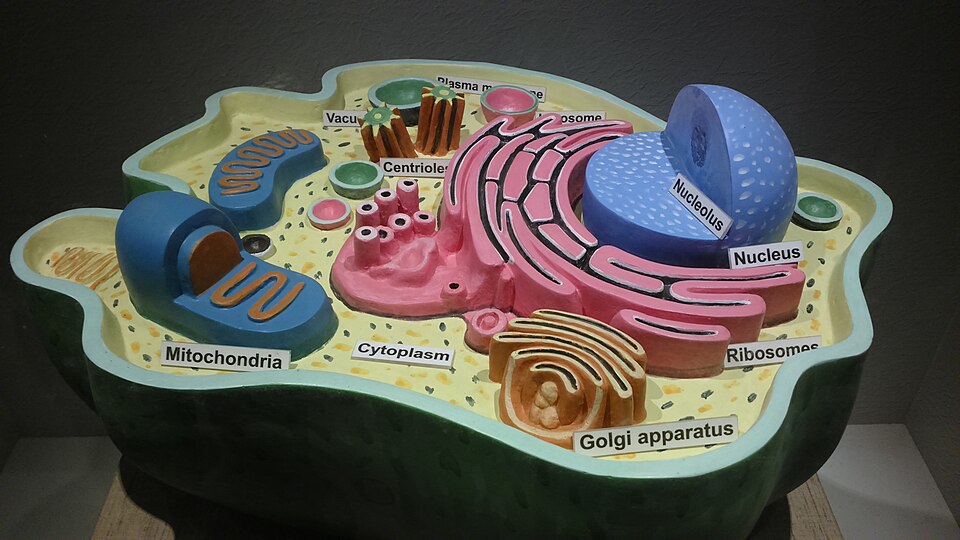
Animal cell structure
Major organs of the human body
Ready to test this chapter?
Practice with exam-aligned questions and timed simulations.
Start Practicing Free